Published 2026-11-22 · Kama'aina Locksmith
Quick Answer
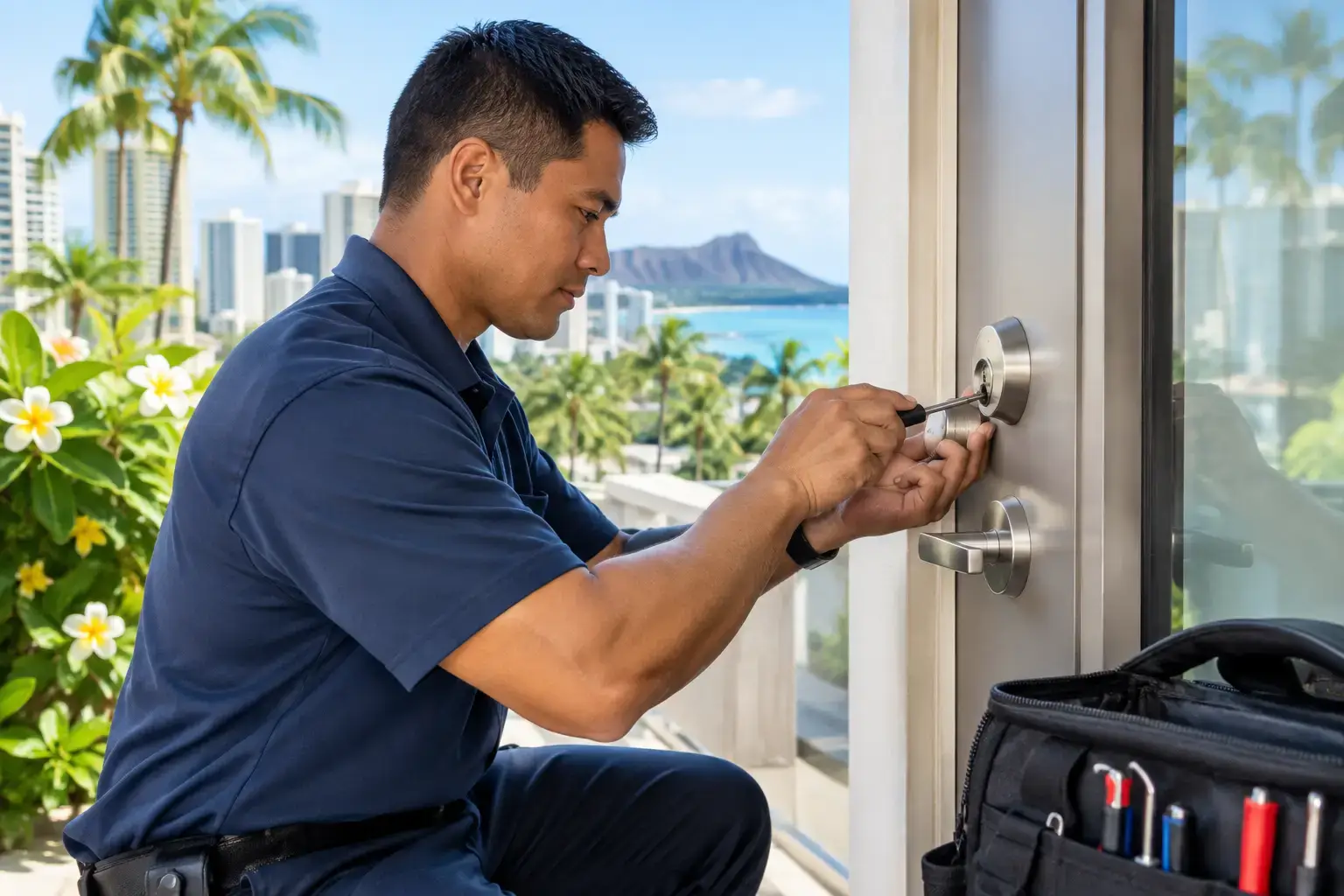
A tenant moves out, keys are returned, and the unit looks ready for cleaning. But tenant turnover rekeying should happen before the next resident receives keys, not after move-in. It is the practical way to make old working keys stop operating the locks while keeping usable lock hardware in place.
Key Takeaways
- Most residential door locks use a pin-tumbler cylinder.
- A returned key ring gives you some information, but it does not prove every copy has come back.
- Schedule lock work early enough that you are not handing a new tenant keys while painters, cleaners, or maintenance crews still need access.
- Oahu's salt air and humidity can be hard on exterior lock hardware, especially near Waikiki, Hawaii Kai, Ewa Beach, and other coastal areas.
- Not all locks can be handled the same way.
Overview
A tenant moves out, keys are returned, and the unit looks ready for cleaning. But tenant turnover rekeying should happen before the next resident receives keys, not after move-in. It is the practical way to make old working keys stop operating the locks while keeping usable lock hardware in place.
For landlords, property managers, and short-term-rental hosts on Oahu, this is a routine part of turnover that deserves a clear process. Condo units in Waikiki and Kakaako, single-family rentals in Kailua, and homes in Kapolei can all have different hardware, building rules, and access needs. The right approach depends on the locks already installed and who needs access between tenants.
What Tenant Turnover Rekeying Actually Does
Most residential door locks use a pin-tumbler cylinder. Inside the lock cylinder are small spring-loaded pins that line up to match the cuts on a key. Rekeying changes that internal pin arrangement so the prior key no longer turns the lock. A new key is then cut to match the updated lock.
This is different from replacing the entire lock. If the deadbolt and knob or lever are in good condition, rekeying typically lets you keep the exterior hardware, door preparation, and overall look of the unit. That matters in condos where matching finishes or approved hardware may be required by the association.
Rekeying is usually a good fit when the lock works properly, the keys are standard and available, and you want a fresh key combination for the incoming tenant. Replacement may make more sense if the lock is sticking, badly corroded, loose on the door, damaged from prior use, or no longer meets the property's security and fire-code needs.
Why Returned Keys Are Not the Whole Answer
A returned key ring gives you some information, but it does not prove every copy has come back. Former tenants may have given a key to a family member, caregiver, cleaner, contractor, or neighbor. A key can also be copied without a landlord knowing about it.
That is why rekeying is commonly handled as a standard turnover step rather than a response to a specific concern. It creates a clean starting point for the next lease and gives you a clear record of when key access changed.
For a multi-unit property, key control can get complicated quickly. A unit may have a front door key, mailbox key, storage key, laundry-room key, gate remote, parking fob, elevator credential, and a separate key for a lanai or window lock. Rekeying the entry door is valuable, but it should be part of a broader handoff plan.
Plan the Work Before Cleaning and Repairs Begin
Schedule lock work early enough that you are not handing a new tenant keys while painters, cleaners, or maintenance crews still need access. In most cases, it is easier to complete rekeying after the outgoing tenant has fully vacated but before the final turnover work is finished.
Start by identifying every opening that requires a key or credential. Check the main entry, rear or side door, attached storage, mailbox, common-area access, and any door between a garage and living space. For a condo, ask the building manager whether certain doors, fobs, or common-area systems are managed by the association rather than the unit owner.
It also helps to decide who should receive keys after the work is done. You may need keys for the new tenant, property manager, owner, maintenance contact, and emergency access. Keep that list limited and current. A small, documented set of keys is easier to manage than a drawer full of unlabeled copies.
A practical turnover checklist
Before the new tenant takes possession, confirm these five points:
- Every exterior entry lock has been rekeyed or replaced as needed.
- Each new key has been tested in the lock and clearly labeled.
- Old keys, fobs, remotes, and access cards have been collected or deactivated where possible.
- The deadbolt, latch, strike plate, door closer, and hinges operate correctly.
- The property file notes the date of service, key quantity, and any hardware concerns.
This check takes little time compared with the disruption of discovering a key or lock issue after move-in.
Salt Air, Humidity, and Worn Oahu Locks
Oahu's salt air and humidity can be hard on exterior lock hardware, especially near Waikiki, Hawaii Kai, Ewa Beach, and other coastal areas. Corrosion may show up as a rough key turn, a latch that does not retract cleanly, discoloration around the cylinder, or screws that are beginning to seize.
Do not assume a sticky lock only needs a new key. A locksmith should inspect whether the issue is inside the cylinder, in the latch, at the strike plate, or caused by door alignment. Humidity and normal building movement can shift a door enough that a deadbolt binds against the frame. Rekeying a lock with an unresolved mechanical problem can leave the new tenant with the same frustrating issue.
For older rentals, the turnover is also a good time to check whether the deadbolt has a proper strike plate and secure mounting screws. This is not always a reason to replace every lock. It is a chance to address wear before the next resident is relying on the door every day.
Rekeying Standard, High-Security, and Smart Locks
Not all locks can be handled the same way. Standard pin-tumbler locks are common in homes and condos and are often straightforward to rekey when they are in serviceable condition.
High-security locks use more restricted key systems or additional internal features. The keyway is the shape of the key opening, and some high-security systems require specific blanks, authorization, or matching components. Before planning a turnover, verify what lock system is installed and whether it can be rekeyed to a new combination without changing the existing hardware.
Smart locks need a different kind of turnover process. Physical backup keys, keypad codes, mobile-app users, temporary codes, and connected hubs all need review. Deleting a former tenant's code is not always enough if their phone still has account access. The owner or manager should remove prior users, create new credentials, test the physical key override if one exists, and document who controls the primary account.
For short-term rentals, keyless entry can reduce the number of physical keys in circulation, but it also requires consistent code management. Use unique codes, remove them after checkout, and avoid sharing the same permanent code with multiple guests or vendors.
When a Master Key System Is Involved
Larger rental properties and small commercial buildings may use a master key system. In this arrangement, each unit has its own operating key, while a manager key can open multiple designated doors. It is useful, but turnover rekeying must be planned carefully so one unit's change does not disrupt the master-key structure.
A locksmith can review the existing keying chart, which is the record showing which keys operate which locks, and determine whether the cylinder can be rekeyed within the system. If the keying records are missing, incomplete, or no longer match the property, rebuilding the system may be worth discussing. The goal is controlled access, not simply issuing more copies.
Questions to Ask Before You Schedule
Have your unit address, building access instructions, number of locks, and any available keys ready when you call. Mention whether the property is a high-rise condo, military housing, a single-family rental, or a commercial space. Those details affect access, hardware options, and whether building approval may be needed.
Ask whether the existing locks appear suitable for rekeying and whether related concerns, such as a loose deadbolt or corroded cylinder, should be addressed during the same visit. If you need new hardware, confirm that it meets your condo or property-management requirements before it is installed.
For pricing, ask for the full price to be quoted upfront by phone, before work starts. You should also know the arrival window before dispatch, particularly if a building manager needs to provide access.
Kama'aina Locksmith serves Honolulu and Oahu with mobile rekeying for rentals, condos, homes, and commercial spaces. The company is bonded and insured, open 24 hours a day, 7 days a week, and provides the full price on the phone before dispatch with no after-hours surcharge. Call (808) 202-3257 when you need a turnover rekeying plan that matches your property, your existing hardware, and your next move-in date. A documented key change now gives the next tenant a clear, orderly start.
Talk to a local locksmith
Need help now? Kama'aina Locksmith is bonded and insured, open 24 hours a day, 7 days a week, and quotes the full price by phone before a technician is dispatched. Call (808) 202-3257 and we will give you an arrival window for anywhere on Oahu.
Need Help? Call a Local Locksmith
Kama'aina Locksmith: bonded & insured since 2012, with a typical 20-30 min response across Oahu.
Call (808) 202-3257