Published 2026-11-17 · Kama'aina Locksmith
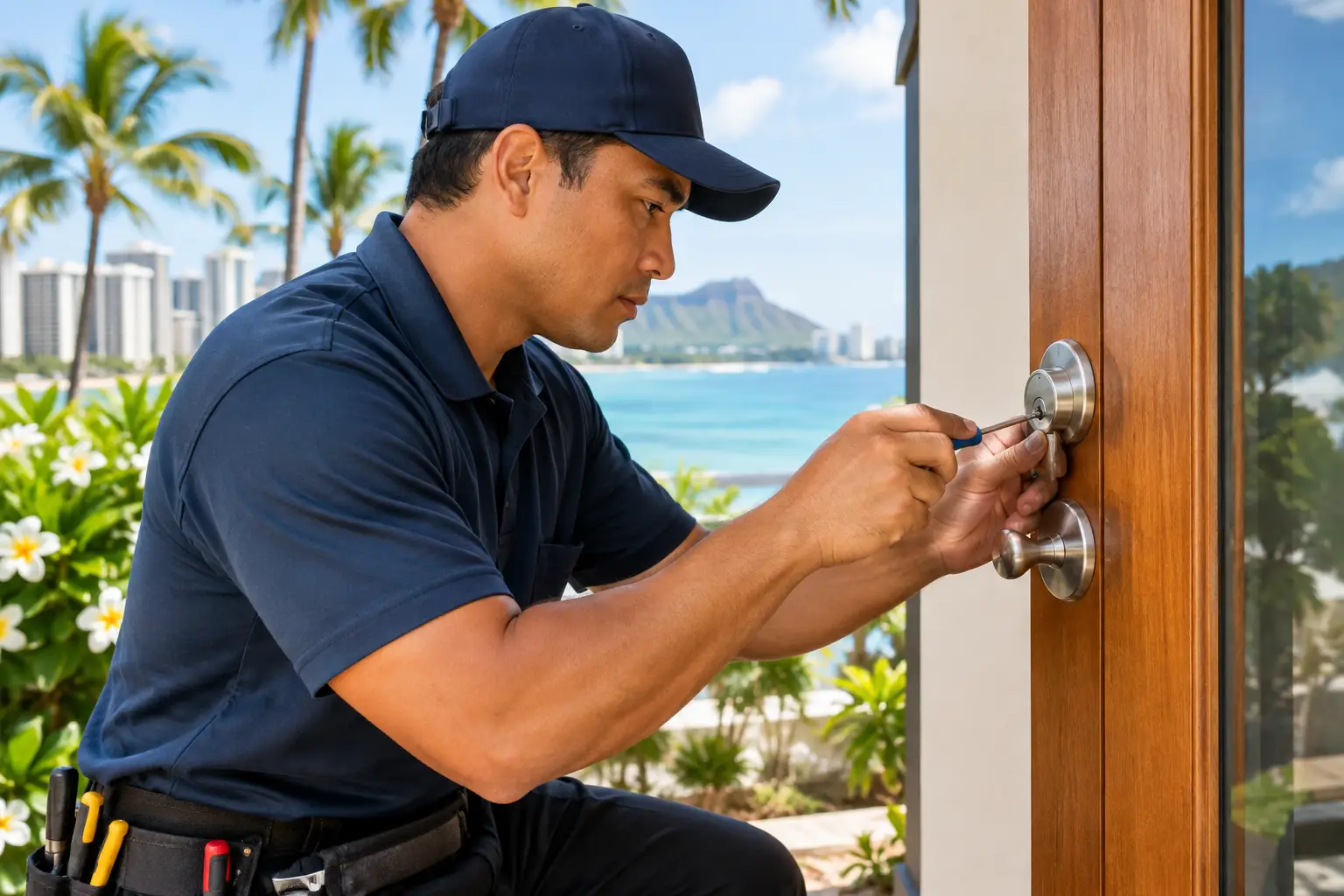
Quick Answer
A lock can look fine on the outside and still be corroding inside. How salt air and humidity damage door locks in Hawaii comes down to moisture settling into small moving parts, then leaving behind salt that causes metal to rust, bind, and wear down.
Key Takeaways
- Salt air is more than damp air with an ocean smell.
- A lock rarely fails without warning.
- Many people reach for a household oil spray when a key sticks.
- The right fix depends on where the corrosion is and how much of the lock is worn.
- Keyless entry can reduce wear from daily key use, but electronic locks still have metal moving parts, battery contacts, and exterior components that face humidity.
Overview
A lock can look fine on the outside and still be corroding inside. How salt air and humidity damage door locks in Hawaii comes down to moisture settling into small moving parts, then leaving behind salt that causes metal to rust, bind, and wear down.
This is common near the water in Waikiki, Hawaii Kai, Kailua, Kaneohe, Ewa Beach, and Ko Olina, but it can happen anywhere on Oahu. Humid air reaches exterior doors, lanais, garage-side entries, storefronts, and even interior condo doors that are exposed when windows stay open.
How salt air and humidity damage door locks in Hawaii
Salt air is more than damp air with an ocean smell. It carries tiny salt particles that land on metal surfaces. When those particles mix with moisture, they speed up corrosion, which is the gradual breakdown of metal caused by a chemical reaction.
A door lock has more vulnerable metal parts than most people realize. The keyway is the narrow slot where the key enters. Behind it is usually a cylinder containing small spring-loaded pins. In a common pin-tumbler lock, the cuts on your key lift those pins to the correct height so the cylinder can turn.
When salt and moisture get inside, the pins and springs can begin sticking. The key may feel rough going in, need extra wiggling to turn, or stop working unless you pull it back slightly. Those are early signs that the inside of the cylinder is no longer moving cleanly.
Deadbolts have their own problem areas. The bolt, latch, tailpiece, screws, and strike plate can corrode or shift over time. A swollen or weather-exposed door may also move slightly out of alignment. You may be able to turn the thumbturn from inside, but the key outside may resist because the bolt is pressing too hard against the strike plate.
Humidity also affects locks without direct ocean exposure. Condensation can form around exterior hardware when air conditioning meets warm, damp outdoor air. In older single-wall homes, ground-level units, and buildings with open breezeways, moisture can stay around the lock longer than you expect.
The signs to act on before you are locked out
A lock rarely fails without warning. If your key begins to drag, the cylinder turns slowly, or you need to push or pull the door to lock it, schedule an inspection before the lock stops working completely.
Watch for reddish rust, white or greenish buildup around screws or metal trim, pitting on the deadbolt, or a loose handle. Pitting means the metal surface has developed small permanent holes from corrosion. It is more than a cosmetic issue because weakened hardware can eventually break or stop lining up properly.
A key that comes out with dark residue may be picking up old lubricant, dirt, and corrosion from inside the cylinder. A sticky lock is sometimes repairable, but continued force can bend or break a key. If a key breaks in the keyway, avoid trying to dig it out with improvised tools. That can push the fragment deeper or damage the cylinder.
For businesses, pay attention to doors used many times a day. A salt-affected storefront lock in Waikiki or a humid exterior office entry in Kakaako can wear out sooner than a low-use residential door. Panic bars, door closers, electric strikes, and access-control hardware also need periodic attention when they are near open-air corridors or wind-driven rain.
Why spraying lubricant is not always the answer
Many people reach for a household oil spray when a key sticks. That may make the lock feel better briefly, but some oily products attract dust and can turn into a gummy film inside the cylinder. On Oahu, that buildup can combine with moisture and salt residue, making the problem return.
A dry lock lubricant made for lock cylinders can be appropriate for minor sticking. Use it sparingly and only as directed. If the key will not insert fully, the cylinder is hard to turn, or corrosion is visible, lubricant alone may not solve the issue. The lock may need cleaning, repair, rekeying, or replacement.
Do not force a deadbolt by turning the key harder. First, try gently pushing or pulling the door while turning the key. If that changes the feel, the issue may be door alignment rather than the key cylinder. If it does not, stop before you damage the key or internal parts.
Repair, rekey, or replace: what makes sense?
The right fix depends on where the corrosion is and how much of the lock is worn. A locksmith can inspect the cylinder, bolt, latch, strike plate, screws, and door alignment to determine whether the existing hardware is still serviceable.
Repair may make sense when the lock body is in good condition but the cylinder is dirty, worn, or mildly corroded. A cylinder can sometimes be cleaned or replaced without changing all of the door hardware. This is useful when a condo has matching handles or an HOA requires a specific exterior appearance.
Rekeying changes the internal pin arrangement so old keys no longer operate the lock. It is often a practical choice after a move, tenant turnover, lost key, or staff change. Rekeying does not correct a heavily corroded deadbolt or loose door hardware, but it can be combined with a repair when the lock is otherwise in workable condition.
Replacement is usually the better path when corrosion has weakened the lock, the keyway is badly pitted, the bolt no longer throws smoothly, or parts are no longer available. Some older or specialty locks require parts shipped from the mainland, so a replacement option may be more practical than waiting on a repair part.
High-security locks may use more complex keyways and tighter internal tolerances than standard pin-tumbler locks. They can provide added key control, but they still need protection from salt and moisture. A more complicated cylinder is not immune to corrosion.
Smart locks need weather planning too
Keyless entry can reduce wear from daily key use, but electronic locks still have metal moving parts, battery contacts, and exterior components that face humidity. On a covered condo door, a smart lock may be a good fit. On a door that gets direct rain or salt spray, the lock's weather rating, location, and installation details matter.
Battery problems are not always battery problems. Corrosion on contacts, a binding deadbolt, or a door that is out of alignment can make a smart lock work harder and act unreliable. If the motor sounds strained or the lock works only when you push the door, have the alignment checked rather than replacing batteries over and over.
For rental properties and short-term stays, keyless entry can simplify code changes. Property managers should still keep a working mechanical key plan and inspect exterior hardware regularly, especially after heavy wind-driven rain.
Practical maintenance for Oahu doors
The simplest prevention is regular inspection. Wipe salt residue from exterior hardware with a soft damp cloth, then dry it. Do not use harsh cleaners that can damage finishes. Look at the lock, screws, hinges, strike plate, and weatherstripping together, because a door problem often involves more than one part.
In most homes, checking exterior locks every few months is reasonable. Homes directly exposed to ocean air may need more frequent checks. Pay extra attention after storms, long periods of rain, or when a door starts feeling different.
Keep a close eye on lanai doors, side gates, storage-room doors, and rarely used exits. These locks often receive the least attention until someone needs them. For commercial properties, include door hardware in regular building maintenance, especially for exits and doors with panic hardware.
If a lock is starting to bind, taking care of it while the door still opens normally gives you more choices. Kama'aina Locksmith is bonded and insured and serves Oahu homes, condos, businesses, and vehicles. For lock repair, rekeying, replacement, or help with a lockout, call (808) 202-3257. We are open 24 hours a day, 7 days a week, give you an arrival window when you call, and quote the full price by phone before dispatch. A small change in how your key turns is often the right time to address the problem, not wait for the lock to quit.
Talk to a local locksmith
Need help now? Kama'aina Locksmith is bonded and insured, open 24 hours a day, 7 days a week, and quotes the full price by phone before a technician is dispatched. Call (808) 202-3257 and we will give you an arrival window for anywhere on Oahu.
Need Help? Call a Local Locksmith
Kama'aina Locksmith: bonded & insured since 2012, with a typical 20-30 min response across Oahu.
Call (808) 202-3257